Who Really Owns Your Book? The ISBN Question Every Indie Should Answer Before Publishing
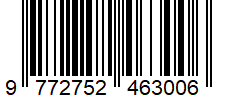
Photo: kulupu pi lipu tenpo, Public domain, via Wikimedia Commons
Ask a room full of indie authors about ISBNs and you'll get blank stares, wrong answers, and at least one person confidently mixing up ISBNs with ASINs. Fair enough—when you're wrestling with cover files and interior formatting, a string of digits feels like paperwork you can worry about later.
But here's the thing: the ISBN decision is really an ownership decision. And depending on how you answer it, you could be locking doors you didn't even know existed.
The Three Paths (Yes, There Are Only Three)
When you publish a print book, you've got three options for identification:
Option 1: The ASIN. Amazon assigns this automatically to every Kindle ebook. It's free, it's permanent for that listing on Amazon, and it means absolutely nothing anywhere else. Barnes & Noble, Kobo, Apple Books, your local indie bookstore—none of them can do anything with an ASIN. For a Kindle-only book, that's fine. It was never leaving the island anyway.
Option 2: A free Amazon-assigned ISBN. KDP offers these for print books at no charge. Sounds like a steal, right? The catch is in the fine print: the ISBN belongs to Amazon's imprint. Your book's identity is registered to them, and here's the kicker—you can't use that ISBN anywhere except Amazon. Want to sell your paperback through IngramSpark, get it into a bookstore, or offer it through your own website with wide distribution? That number won't travel.
Option 3: Your own ISBN from Bowker. Bowker is the official U.S. ISBN registration agency, and a single ISBN runs $125. But the pricing gets friendlier with volume: a pack of ten costs $295 and a block of 1,000 runs $575—roughly 58 cents apiece. Once you own the number, it's yours. Put it on your KDP paperback, your IngramSpark hardcover, your special edition, whatever. Same number, same book, everywhere it goes.
What "Owning" Actually Buys You
A self-owned ISBN does a few things an Amazon-assigned one can't:
- Portability. Move your book between printers and distributors without changing its identity. Retailers, libraries, and reviewers who've recorded your ISBN keep finding the same book.
- Multiple formats. Each format and edition needs its own ISBN—paperback, hardcover, audiobook. Buying in bulk makes building a backlist dramatically cheaper.
- Professional credibility. When a library or bookstore buyer looks up your book and sees your own imprint listed as publisher rather than an Amazon-owned prefix, you read as a legitimate small press. It's not everything, but it's not nothing either.
- Control. Your title, your imprint, your metadata. If you ever leave KDP, your book's identity comes with you.
The Cost Math, Honestly
Let's not pretend $125 doesn't sting when you're publishing your first novel and your marketing budget is a gift card. So run the numbers for your situation:
- Kindle-only author: Zero ISBNs needed. The ASIN is free and sufficient. Done.
- Amazon-exclusive print author: The free KDP ISBN is genuinely fine—if you're certain you'll never want wide distribution. Changing your mind later means republishing under a new ISBN, which resets your reviews on some platforms and muddies your sales history.
- Wide author or hybrid-curious: Buy your own, no question. One ISBN at $125 is cheaper than republishing your entire catalog later, and the ten-pack at $295 future-proofs your next several books.
- Series writers: Do the ten-pack math. If you're planning a trilogy with paperback, hardcover, and audiobook editions, that's nine ISBNs. The block price pays for itself before book two.
A Quick Decision Framework
Answer two questions:
- Will this book (or my next three) ever sell anywhere besides Amazon? If yes, or even maybe—buy your own.
- Am I building a publishing imprint or testing a single title? Building? Own your numbers. Testing? The free route keeps your upfront costs at zero.
There's no shame in the free ISBN. Plenty of successful authors run Amazon-first operations and never look back. But go in with eyes open: the free option is a convenience, not a gift. Amazon isn't assigning you that number out of generosity—they're assigning it to themselves.
The Bottom Line
Your book is a business asset, and assets are worth owning outright. If you're in this for the long haul—series, backlist, wide distribution, maybe a bookstore event at your local indie someday—spend the money on Bowker ISBNs and publish under your own imprint. If you're dipping a toe in with one Amazon-exclusive title, take the free number and revisit the question when your second book starts taking shape.
Either way, make the choice deliberately. Your book's identity shouldn't be an accident of the upload process.